

I’ve been having a good few conversations about where the digital landscape is going and how they are constantly shifting; search everywhere optimisation (SEO) is the strategy I and other businesses can no longer ignore.
It’s not just about Google anymore. Users are searching everywhere—Amazon, TikTok, Instagram, YouTube, and even within apps like Spotify. To stay relevant, brands need to adapt to this multi-platform behaviour.
I really wanted to dig into some of my thought on search everywhere optimisation, why it’s a game-changer for digital marketing, and practical steps to implement it successfully. I wanted to produce a really helpful piece of content on search everywhere optimisation.
What is Search Everywhere Optimisation?
Search everywhere optimisation is the practice of tailoring content and strategies to rank well across multiple search engines and platforms. Unlike traditional SEO, which focuses on Google, this approach considers the diverse environments in which consumers now search. Think of shoppers on Amazon, video enthusiasts on YouTube, or Gen Z users turning to TikTok for product recommendations.
Key Platforms Driving Search Everywhere Optimisation
- Google: The original search giant, critical for traditional SEO.
- Amazon: The dominant platform for product searches.
- TikTok and Instagram: Vital for trend-driven discovery.
- YouTube: A powerhouse for tutorials, reviews, and long-form content.
- App stores: Where users hunt for solutions and entertainment.
- Voice search devices: Alexa, Google Home, and Siri reshape how users find information.
These platforms have distinct user behaviours, necessitating tailored optimisation strategies for each.
Why Search Everywhere Optimisation Matters

Consumers now dictate where they search, and their habits are increasingly fragmented. Here’s why this shift demands attention:
1. Platform Preferences Vary
Research shows 74% of US consumers begin product searches on Amazon rather than Google. On TikTok, billions of views under hashtags like #TikTokMadeMeBuyIt reveal the platform’s role in influencing buying decisions.
2. Younger Audiences Prefer Newer Platforms
A Pew Research study highlighted that younger demographics, particularly Gen Z, rely on TikTok and Instagram for recommendations over traditional search engines. Failing to engage on these platforms means missing out on key audience segments.
3. Expanding Search Contexts
Voice searches, visual searches, and app-specific queries continue to grow. Businesses need to be present where these interactions happen or risk losing visibility.
How Search Everywhere Optimisation Transforms Strategy
Search everywhere optimisation ensures brands remain visible by adapting to user behaviour. For example:
- A user looking for a “budget-friendly coffee machine” may search differently on Amazon (product-focused) than TikTok (influencer recommendations).
- Brands that optimise content for both contexts can capture a broader audience.
By diversifying efforts, businesses create a resilient strategy that doesn’t depend on one platform alone.
The Key Elements of Search Everywhere Optimisation

1. Platform-Specific Strategies
Every platform has unique rules for ranking content:
- Amazon: Focus on product descriptions, pricing, and reviews.
- TikTok: Emphasise trends, hashtags, and engaging short-form videos.
- YouTube: Optimise thumbnails, video titles, and watch time.
2. Customised Keyword Research
Keyword intent shifts across platforms. A Google keyword like “buy running shoes” may translate to a TikTok trend hashtag (#RunnersClub) or an Amazon search focused on product attributes (e.g., “best cushioned running shoes”).
3. Emphasis on Content Format
Platforms reward content suited to their users:
- Short videos for TikTok and Instagram.
- Long-form tutorials for YouTube.
- Detailed product descriptions for Amazon.
4. Data-Driven Adaptation
Platform analytics guide optimisation efforts. TikTok metrics (views, shares) differ from YouTube stats (watch time, audience retention), but both provide essential feedback.
Step-by-Step Guide to Implementing Search Everywhere Optimisation
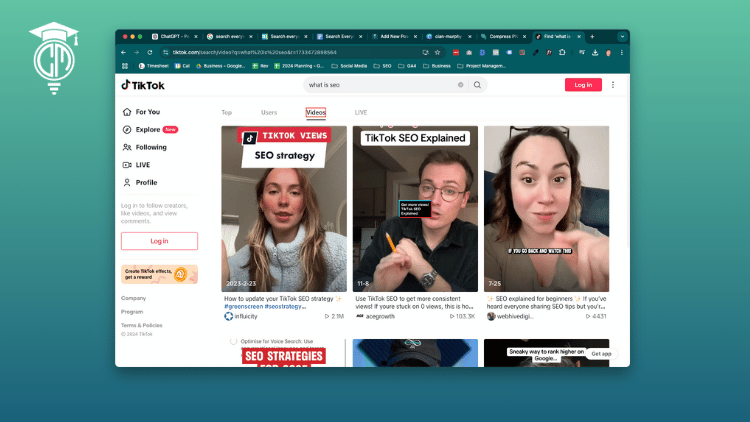
Step 1: Audit Current Presence
Identify where your audience is most active. Use tools like Google Analytics to track traffic sources and align efforts with popular platforms.
Step 2: Define Goals for Each Platform
Goals should be specific and measurable, such as:
- Increasing TikTok engagement by 30%.
- Boosting Amazon conversion rates by 15%.
- Improving YouTube video watch time by 20%.
Step 3: Create Platform-Specific Content
Diversify your content strategy. For example:
- TikTok and Instagram: Focus on trends, Reels, and Stories.
- YouTube: Create detailed tutorials, reviews, and interviews.
- Amazon: Invest in optimised product listings and strong visuals.
Step 4: Track Performance Regularly
Use platform analytics to adjust campaigns. Metrics like click-through rates, comments, and shares inform future strategies.
Expanded Tools for Search Everywhere Optimisation
Let’s dive deeper into the tools that power search everywhere optimisation.
SEO Tools
Traditional SEO tools remain crucial:
- SEMrush: Great for identifying keyword opportunities and conducting site audits.
- Ahrefs: Best for tracking backlinks and researching competitors.
- Amazon-Specific Tools
- Amazon optimisation demands precision:
- Helium 10: Offers tools like Scribbles for listing optimisation and keyword tracking.
Social Media Tools
Social media tools enable consistent posting and performance tracking:
- TikTok Creative Centre: Identify trending formats.
- Later: A visual scheduling tool for platforms like Instagram.
Content Management Tools
For managing campaigns across platforms:
- Buffer: Excellent for collaboration.
- Hootsuite: Comprehensive and supports in-depth analytics.
AI-Driven Tools
- ChatGPT: Ideal for quick content ideas.
- AnswerThePublic: Use to identify frequently asked questions and align content.
Addressing Challenges in Search Everywhere Optimisation
1. Time and Resource Constraints
Managing multiple platforms requires significant investment. Automation tools like Zapier or Sprout Social can streamline repetitive tasks.
2. Staying Trend-Responsive
Platforms like TikTok demand constant attention to trends. Dedicate team members or tools to monitor shifts.
3. Algorithm Complexity
Each platform’s algorithm evolves differently. Staying educated through resources like Search Engine Land ensures strategies remain up-to-date.
The Future of Search Everywhere Optimisation: AI, Voice Search, and Beyond
The future of search everywhere optimisation is being shaped by two transformative forces: artificial intelligence (AI) and voice search. These technologies are fundamentally altering how users interact with digital platforms and how businesses must optimise content to maintain visibility. Let’s explore these dynamics in greater depth.
AI Revolutionising Search Dynamics
Artificial intelligence is no longer just a buzzword; it’s actively changing how search engines and platforms operate. AI-powered tools, such as Google Bard, Microsoft’s integration of ChatGPT into Bing, and other conversational AI models, are shifting the search landscape in three key ways:
- Natural Language Processing (NLP) in Search Queries AI tools excel in understanding user intent, even when queries are conversational or ambiguous. For instance, users no longer search with clunky, keyword-stuffed phrases like “best hotels Dublin budget.” Instead, they type or voice queries like, “Where’s a good budget-friendly hotel in Dublin?” Optimising for these natural language queries means aligning your content to reflect how people actually speak and think.
- AI-Powered Rich Results Search engines increasingly rely on AI to deliver rich results, such as featured snippets or knowledge panels, directly within search results. To secure these coveted spots, businesses must create content that answers user questions succinctly and provides structured information, such as lists, tables, and quick summaries.
- Personalisation Through AI AI-driven search platforms adapt results based on user history, preferences, and behaviour. For example:
- A frequent Amazon shopper might see personalised product suggestions.
- Spotify’s AI curates search results based on listening history.
By optimising for personalisation—offering specific, relevant, and localised content—you can ensure your brand appears where it matters most.
Voice Search: The Next Frontier

Voice search, driven by devices like Amazon Alexa, Google Assistant, and Apple’s Siri, is redefining how users search. According to Statista, the number of voice assistant users worldwide is projected to reach 8.4 billion by 2024—outpacing the global population due to multiple device usage per person.
Key Implications of Voice Search
- Conversational Queries Voice search queries are often phrased as full sentences or questions, such as “What’s the best Italian restaurant near me?” rather than typing “Italian restaurant Dublin.” This shift requires content that addresses FAQs directly and conversationally.
- Focus on Local Search Voice searches frequently involve local intent. Phrases like “near me” or “open now” dominate, making local SEO essential. Businesses should:
- Optimise Google Business Profiles.
- Include structured data for locations and opening hours.
- Use localised keywords.
- Featured Snippets and Zero-Click Searches Voice assistants often read out information from featured snippets. To capture this visibility, content must be clear, concise, and structured to directly answer common queries.
AI-Powered Assistants and the Future of Discovery
Voice and AI assistants are evolving beyond search to become proactive discovery engines. For instance:
- Alexa might recommend products based on purchase history.
- Google Assistant could suggest travel itineraries based on previous searches.
Brands that provide detailed, contextually rich content will stand a better chance of being featured in these recommendations.
Strategies to Optimise for AI Assistants
- Adopt Schema Markup: Use structured data to make your content machine-readable for AI tools.
- Focus on Actionable Content: Create content that answers “how-to” or “what” questions, as these are often favoured by AI for user responses.
- Optimise for Multimodal Queries: As users engage with assistants on phones, smart displays, and cars, ensure your content adapts across multiple formats.
AI-Driven Search Integration Across Platforms
AI isn’t just transforming Google—it’s influencing how people search across TikTok, YouTube, and even Amazon. TikTok, for example, uses AI to deliver personalised recommendations based on user behaviour, making it a discovery engine in its own right. Similarly, Amazon’s AI-driven algorithms suggest products users didn’t even know they needed.
Preparing for AI’s Impact Across Platforms
- Leverage Platform-Specific AI Tools: Use TikTok Creative Centre and YouTube Studio insights to understand how AI impacts engagement and trends.
- Invest in Visual AI Readiness: Tools like Pinterest Lens and Google Lens allow users to search visually. Brands must optimise images with descriptive alt tags and metadata.
- Keep Up with AI Trends: The integration of AI into Bing and Google Search means brands must stay informed about algorithm changes and tools to remain competitive.
The Omnipresent Future: Search is Everywhere
As AI and voice search evolve, search everywhere optimisation will no longer just mean adapting to different platforms—it will require anticipating where and how users want information.
- Wearables and IoT Devices Searches on wearables like smartwatches and IoT devices like connected fridges represent a growing frontier. Brands will need to optimise content for even smaller screens and highly specific contexts.
- Augmented Reality (AR) and Virtual Reality (VR) Search With AR and VR gaining traction, search will extend into immersive environments. For example, a user wearing AR glasses could search for furniture by scanning their living room. Content strategies will need to account for 3D models and AR-compatible visuals.
- Seamless Cross-Platform Search The future will likely see unified search experiences, where AI assistants pull information from all platforms—Google, TikTok, Amazon, and others—to deliver a single, comprehensive response.
How to Stay Ahead in an AI-Driven Search Landscape
To prepare for the future, brands should:
- Adopt Conversational Content: Optimise for dialogue-style queries by writing in a natural tone.
- Focus on Voice and Visual Search: Include voice-friendly keywords and ensure all visual assets are optimised.
- Prioritise Structured Data: Implement schema markup to make your content accessible to AI algorithms.
- Invest in Real-Time Analytics: Use tools that provide insights into voice and AI-driven traffic patterns.
What’s my feelings on Search Everywhere Optimisation?
Search everywhere optimisation is no longer a buzzword; it’s a necessity for modern brands. By understanding the nuances of platform-specific strategies, leveraging powerful tools, and addressing challenges head-on, businesses can ensure visibility across today’s fragmented digital landscape.
Are you ready to embrace search everywhere optimisation? The opportunity to grow your audience across platforms is waiting—so start optimising now!